
Direct Commercial Reinstatement for Singapore Offices

The lease sets the reinstatement finish line, so an office handback involves more than clearing furniture. Commercial reinstatement means returning the space to the condition required by the tenancy agreement. A reinstatement direct contractor can coordinate the work from scope assessment through handover. Start planning two to three months before lease expiry to allow time for approvals and scheduling.
It’s reasonable to want a clear scope, a workable timeline and an itemised quotation. Reinstatement may involve removing tenant-installed fittings, repairing surfaces and preparing the premises for inspection. The lease, the unit’s original condition and building-management requirements help determine the work. A reinstatement direct contractor coordinates these tasks against the agreed scope.
This guide explains what commercial reinstatement in Singapore involves, which approvals may apply and how to plan around your lease deadline. It also shows how to compare quotations by checking their scope, exclusions, coordination and handover tasks.
Table of Contents
What Is Commercial Reinstatement In Singapore?
Commercial reinstatement is the work required to return rented premises to the condition specified in the tenancy agreement. In Singapore, commercial tenancy agreements commonly include a reinstatement clause requiring tenants to undo their modifications before returning the keys. The agreed scope, not a generic checklist, determines what stays, what is removed and what needs repair.
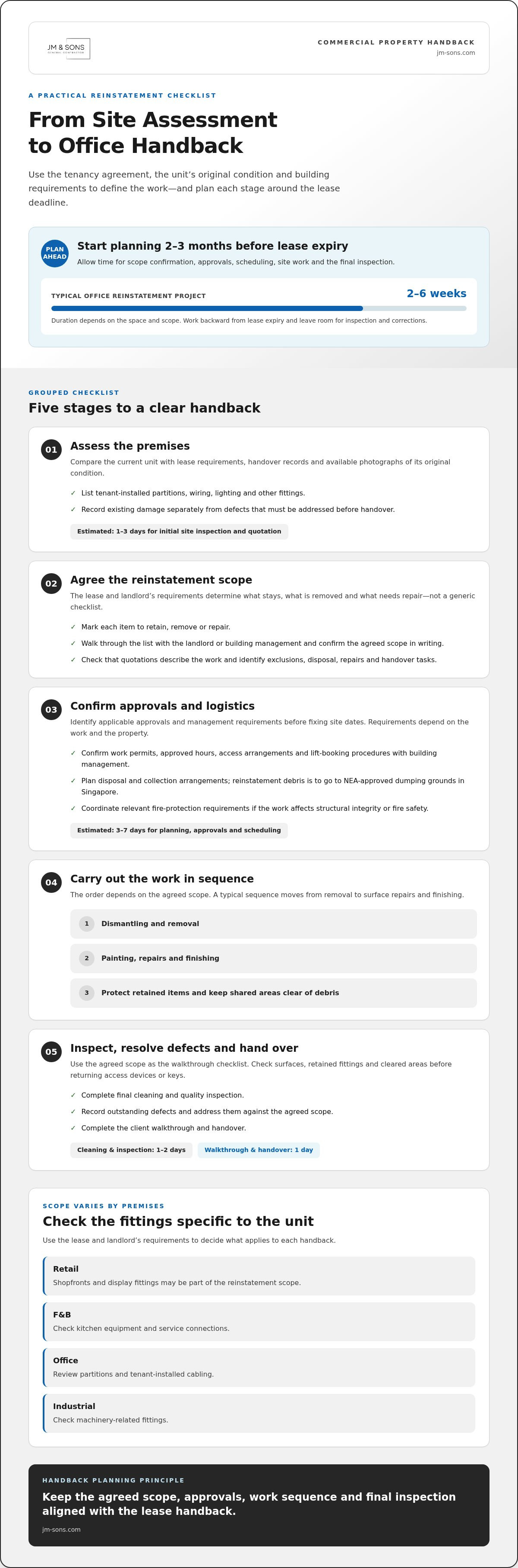
Assess the premises. Compare the current unit with lease requirements, handover records and available photographs of its original condition. List tenant-installed partitions, wiring, lighting and other fittings. Record existing damage separately so the reinstatement scope distinguishes old defects from work required before handover.
Set the scope. Identify items to retain, remove or repair, then walk through the list with the landlord or building management. For example, a landlord may require tenant-added partitions to be removed while original power points remain. Clear written scope helps avoid assumptions during quotation and site work.
Plan the sequence. An initial site inspection and quotation is estimated at 1–3 days. Planning, approvals and scheduling are estimated at 3–7 days. Allow time to arrange access, work permits, disposal and any building-management requirements before dismantling begins.
Carry out reinstatement. The work sequence can include dismantling and removal, followed by painting, repairs and finishing. The sequence depends on the unit’s scope. Protect retained items and coordinate removal so debris does not obstruct shared building areas.
Inspect and hand over. Final cleaning and quality inspection are estimated at 1–2 days, followed by a 1-day client walkthrough and handover. Use the agreed scope to check surfaces, retained fittings and cleared areas. Record outstanding defects and resolve them before returning access devices or keys.
Retail, F&B, office and industrial premises each need a different reinstatement scope. A retail handover may focus on shopfronts and display fittings; an F&B unit may include kitchen equipment and service connections. An office often involves partitions and tenant-installed cabling. Industrial reinstatement may include machinery-related fittings. In every case, the lease and landlord’s requirements define the return condition.
Plan how removed materials will leave the building and where debris will go. Reinstatement debris is to be disposed of at NEA-approved dumping grounds in Singapore. Coordinate building access, lift use and collection arrangements with management before removal begins.
A typical office reinstatement project takes 2 to 6 weeks, depending on the space and scope. Use the timeline to work backward from lease expiry, leaving room for inspection and any required corrections. A completed work schedule should connect assessment, approvals, dismantling, repairs, cleaning and the final commercial property handover.
Permits and building-management requirements
Before work begins, distinguish statutory submissions from building-management permits. In Singapore, most commercial building works, including partition installations that alter the original layout, require a permit under the Building Control Act. Minor works may still need building-management approval, even if they do not require a full BCA submission. The scope matters: removing a partition, changing flooring or altering services can trigger different requirements.
For work affecting structural integrity or fire safety, plans may need endorsement by a Qualified Person or Professional Engineer. Full-height partitions, for example, can affect sprinkler coverage or smoke-detector paths. Include relevant fire-protection coordination in the scope before scheduling dismantling or reinstatement. The building’s technical team can clarify its submission steps and required documents.
New submissions must use Singapore’s CORENET-X platform from October 1, 2026. This applies to new submissions, so tenants should identify early whether their proposed work needs one. The submission route depends on the work involved. Keep plans, scope descriptions and relevant endorsements aligned, so the documents describe the same proposed changes.
Building management also controls access and site logistics. Ask for the current work-permit process, approved working hours, lift-booking procedure and requirements for contractors entering the premises. In 90% of Singapore commercial buildings, hacking and heavy drilling are restricted to after 6:00 PM on weekdays or full days on weekends. That restriction can affect the timeline, labour sequence and disposal arrangements.
Management may require Public Liability insurance with minimum coverage of S$1 million before granting a work permit. Confirm what documentation and submission format the building requires. A permit application should identify the work area, activities, access needs and proposed dates. For example, flooring removal may create different noise and debris needs from painting, so describe each activity clearly.
For commercial premises in an HDB estate, don’t assume the approval route is the same as for a private office tower. The property type, work scope and estate arrangements can affect which approvals apply. Confirm requirements with HDB and the relevant building management before setting the work schedule. In a private commercial building, coordinate the landlord’s conditions with the management office’s permit and access rules.
Put approvals into the project schedule before confirming site dates. A permit and reinstatement scope discussion can help organise the documents and work sequence around the unit’s requirements.
Fines for failing to obtain necessary permits before demolition or renovation in Singapore range from $5,000 to $200,000, so confirm approvals before work begins. Full-height office partitions can obstruct existing fire sprinkler coverage or smoke detector paths, triggering a legal requirement to relocate or add fire protection points.
Reinstatement costs and quote transparency
In Singapore, reinstatement costs depend on the lease scope, unit condition, property type and work sequence. The price depends on the case and is given after a quote request; key factors include removal, repairs, disposal, access and building-management requirements.
Exclusions and Hidden Charges
Compare quotations line by line, not just by the total. Check whether dismantling, transport, disposal, surface repairs, repainting, cleaning and final inspection are included. If debris removal is excluded, for example, you may need to arrange and budget for it separately before handover.
A direct contractor coordinates the reinstatement work, while an intermediary may coordinate separate trades. Neither arrangement automatically means a lower-cost quote; compare the stated scope, responsibilities and exclusions. With any contractor, check for gaps in trade coordination and clarify responsibility in writing for every task.
Ask for every exclusion to be listed in writing, including work that might be identified after inspection. For example, a quotation might cover removing floor finishes but exclude repairs to the exposed base. Confirm how additional work will be priced and approved before it proceeds, so changes are clear throughout the project.
Compare quotations against the same reinstatement checklist and lease requirements. Check quantities, materials, disposal arrangements, access assumptions and handover preparation. Building-management requirements can affect working hours and logistics, so confirm that the quotation accounts for them. A clear written agreement should state inclusions, exclusions, variation approval and payment milestones.
Responsibility for Reinstatement Costs
The commercial tenancy agreement sets out the tenant’s reinstatement obligations and who is responsible for the required work. Read the reinstatement clause alongside any schedules or handover records that describe the unit’s original condition. For instance, the agreement may distinguish landlord-provided fittings from tenant-installed partitions, changing what must be retained or removed.
Before appointing a contractor, compare the proposed scope with the lease clause and any written landlord instructions. Record agreed changes in writing. This gives the tenant, landlord and contractor the same description of the work, rather than leaving them to rely on an informal understanding at the final inspection.
Property type affects the work items in a quotation, not just the unit’s size. An office may involve partitions and cabling; a retail unit may include shopfront fittings; an F&B space can have kitchen-related items; and an industrial unit may contain equipment-related installations. Assess each item against the lease and the required return condition.
Keep the security deposit separate from the contractor’s quotation when reviewing the total project costs. The tenancy agreement governs the tenant’s obligations, while the quotation describes the contracted work. Align both documents before authorising reinstatement, and keep inspection notes, approved changes and handover records with the agreement.
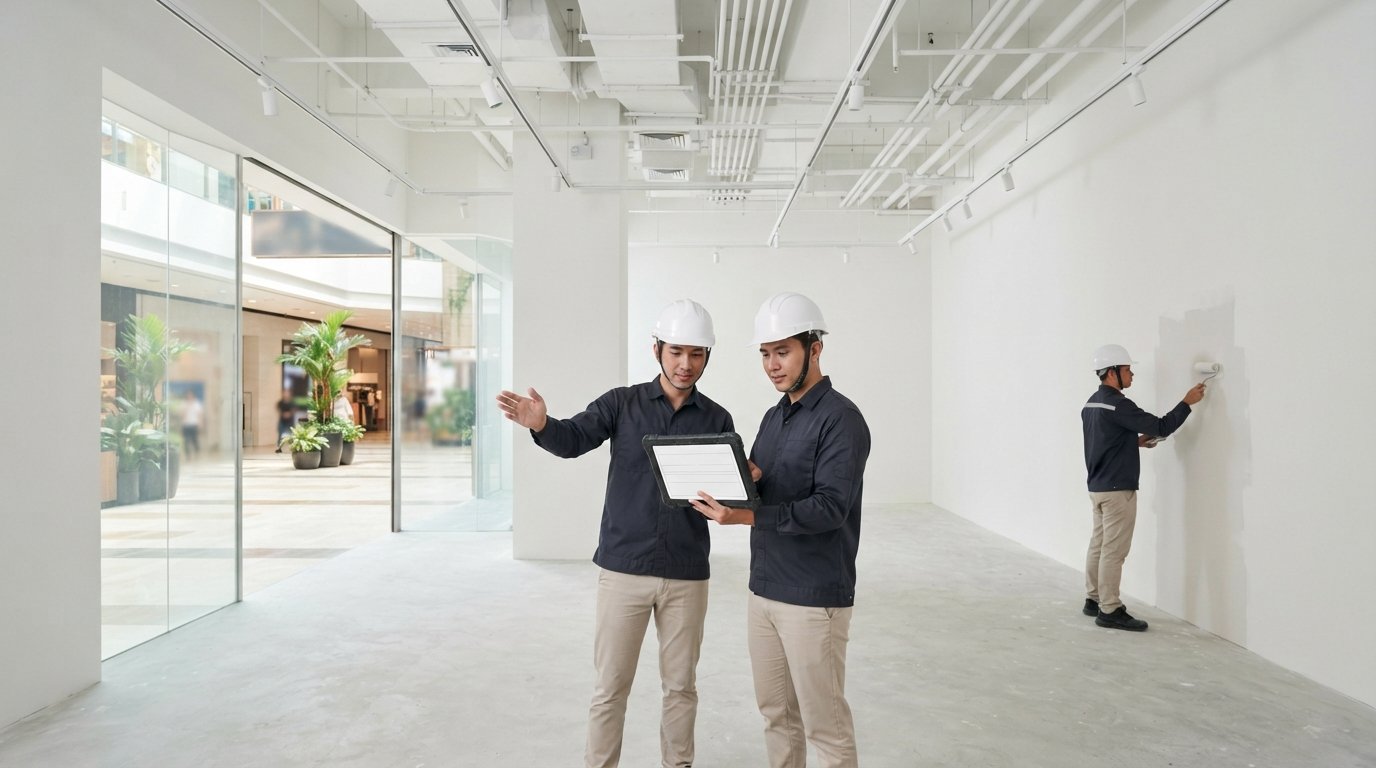
Direct reinstatement for offices and commercial properties
A direct reinstatement arrangement puts one contractor in charge of coordinating the work, from site assessment to completion. For Singapore offices, this can simplify communication across dismantling, electrical, ceiling, flooring and painting tasks. A connected work sequence helps trades follow the same scope, while the project coordinator tracks dependencies and progress.
Start by comparing the premises with the original condition and the landlord’s return requirements. Mark each item to retain, remove or repair. For example, an office may need tenant-added partitions dismantled, wiring removed and damaged paintwork made good. A written scope gives the site team a shared reference and helps prevent the removal of items that should stay.
Next, group related work into a sequence. Dismantling should precede repairs to surfaces exposed by removal; painting follows those repairs. Electrical, ceiling, flooring and partition reinstatement works are estimated to take 5–10 days. The actual schedule needs to account for access, building rules and the order of tasks, rather than treating every trade as a separate, unrelated visit.
Direct coordination matters when work areas overlap. Removing a partition can affect ceiling finishes, floor edges and nearby services. The coordinator can schedule tasks in sequence, identify dependencies before work begins and record changes against the approved scope. If structural work or fire-safety considerations arise, pause the affected task until the required approvals and coordination are addressed.
Before dismantling begins, confirm site arrangements with building management. Agree how workers and materials will enter, where removed items will be staged and how disposal will be handled. For a multi-floor office, specify the work areas and access route. These details organise removal and help limit disruption to occupied areas.
During the project, keep a brief progress record of completed tasks, open items and decisions. For example, note whether partition removal is complete or painting needs another pass. If site conditions change the scope, document the change and its effect on sequencing before authorising further work.
At completion, compare the finished space with the agreed return condition. Check retained fittings, repaired surfaces, cleared work areas and completed disposal. Walk through the unit with the relevant parties, record defects and assign each outstanding item before handover. A direct arrangement works best when one accountable coordinator carries the approved scope through to the final inspection.
What reinstatement work is typically required when returning a rented property in Singapore?
In Singapore, commercial tenancy agreements commonly include a reinstatement clause requiring tenants to undo their modifications before returning the keys. The clause and the landlord’s written instructions define the return condition. Compare them with the unit’s original condition, then list tenant-installed items to remove, retain or repair.
For an office, the list may include partitions, data points, tenant-installed wiring, lighting and air-conditioning units. Commercial reinstatement can involve removing these additions while retaining the landlord’s original power points. Clearly mark retained items to prevent accidental removal and keep the work aligned with the agreed scope.
Assess ceilings, flooring and wall finishes separately. Removing a partition, for example, can leave floor gaps, ceiling marks or exposed surfaces that need repair. In commercial spaces, properly remediating these overhead and boundary structures aligns with the standards practiced by ceiling and partition specialists like Leo Ceilings, ensuring joints, tiles, and plaster are seamlessly made good. Painting may be needed if removal damages finishes or the lease specifies a particular return condition. Record affected areas during inspection, preferably with photographs linked to the scope.
Retail and F&B premises can have different additions. A shop may contain display structures or a tenant-installed shopfront; a café may include kitchen fittings and service connections. Industrial units may have equipment-related installations. The tenancy agreement determines which items must be removed and which landlord-provided fixtures must remain.
Describe electrical and mechanical work by the equipment or installation involved, rather than simply labelling it “remove services.” For example, distinguish tenant-added cabling from original power points. Structural modifications, such as wall hacking, or major mechanical and electrical work may require a Professional Engineer endorsement. Identify these items early so approvals and work sequencing can be considered before removal.
Disposal is part of the practical handback scope. Reinstatement debris is to be disposed of at NEA-approved dumping grounds in Singapore. Plan how materials will be separated, moved through the building and taken off-site. Include disposal in the work plan rather than leaving debris clearance until the final inspection.
Prepare a handover checklist from the lease clause and agreed scope. Group items into removed fittings, retained landlord fixtures, repaired surfaces, cleared areas and outstanding defects. During the walkthrough, compare each item with the checklist and record any corrections needed. This gives the tenant and landlord a clear reference before the keys are returned.
Share your lease reinstatement clause, site photographs and checklist to discuss your reinstatement scope and organise the work around the required handback condition.
JM & SONS General Contractor Pte: Commercial Interior Fit-Out
JM & SONS General Contractor Pte Ltd provides commercial services for businesses planning their next project after handover. If you’re moving into another office or reshaping a commercial space, the services include Commercial Interior Fit-Out, Office Renovation and Fit-Out, Commercial Space Planning, and Commercial Design and Build.
These services suit projects where the next premises needs a coordinated layout and construction plan, rather than reinstatement alone. Share your floor plan, site photographs or project requirements to describe the space and its intended use. This gives the team a practical starting point for discussing the work.
For a straightforward conversation about your upcoming commercial project, contact JM & SONS General Contractor Pte or visit jm-sons.com.
Make the Handover Decision With a Clear Record
Before closing out a tenancy, decide who in your organisation will make the final handover decisions. A facilities manager, office lead or landlord representative can keep approvals and outstanding items moving, rather than leaving responsibility unclear as the move date approaches.
Once the space is returned, focus on the next business need. If you’re planning a new office or commercial layout, treat it as a separate project from the completed handback, with its own priorities and decisions.
For a calm discussion about what comes next, contact JM & SONS General Contractor Pte Ltd. The team can talk through your commercial project when you’re ready.
Frequently Asked Questions
What does direct contractor reinstatement mean in Singapore?
A reinstatement direct contractor is engaged by the tenant to carry out the work under a direct contract, rather than through a separate project intermediary. The entity named in the contract is the tenant’s contractual counterparty. Before signing, check who can approve variations, how payments are handled and what records demonstrate completion. This keeps instructions and responsibilities connected to the signed agreement.
How much does reinstatement work cost in Singapore per square foot?
There is no dependable universal per-square-foot rate for Singapore reinstatement. Relevant cost factors include measured floor area, removal scope, surface condition and access arrangements. Ask each quotation to state its area basis and explain which tasks are priced separately. Rates based on different area measurements cannot be compared as though they cover identical work.
What licenses, insurance, and permits are needed for reinstatement work in Singapore?
No single document serves as approval for every reinstatement project. Build a project file with the contractor’s relevant credentials, insurance documentation, building work-permit records and any authority submissions required for the proposed scope. The tenant and contractor should identify who prepares and submits each document. Building management and relevant authorities can clarify the applicable process for the premises and work involved.
What are the steps and timeline for commercial property reinstatement in Singapore?
Plan around both a work schedule and a handover schedule. The work schedule tracks site activities; the handover schedule also accounts for decisions, access arrangements and the landlord’s inspection. Allow for the difference between active working days and elapsed calendar time, especially when access or approvals affect the start date. Keep the lease-end date visible when setting milestones, rather than treating site completion as the only deadline.
What reinstatement requirements apply to HDB flats, condominiums, and commercial units in Singapore?
Start with the documents that govern the specific premises. For an HDB flat, distinguish an owner’s renovation records from a tenant’s move-out obligations. For a condominium, include management’s written conditions alongside the tenancy terms. For a commercial unit, use the lease and landlord’s handback instructions as the working reference. The property category matters because the relevant documents and parties setting the return condition differ.
Comments