
Singapore Reinstatement Works: 2026 Tenant Compliance Guide

What if your final month of rent actually cost you triple the usual amount because a single sprinkler head wasn't aligned with the original floor plan? It's a stressful scenario that many Singaporean business owners face when they realize that reinstatement works regulations Singapore are about far more than just a fresh coat of paint. You've worked hard to build your business, and the last thing you need is a rejected handover or a forfeited security deposit on your way out the door.
We believe that transparency is the only way to navigate these complex commercial requirements without the fear of hidden costs. This guide will help you master the 2026 compliance landscape, including the mandatory CORENET X digital submission protocols for larger projects and essential SCDF fire safety standards. You'll gain the clarity needed to manage the relationship between your landlord, the authorities, and the building management with complete confidence. We'll break down the timeline for a compliant handover and explain how to secure a fair, detailed quotation that ensures a smooth transition to your next space.
Table of Contents
Understanding Reinstatement Works Regulations in Singapore
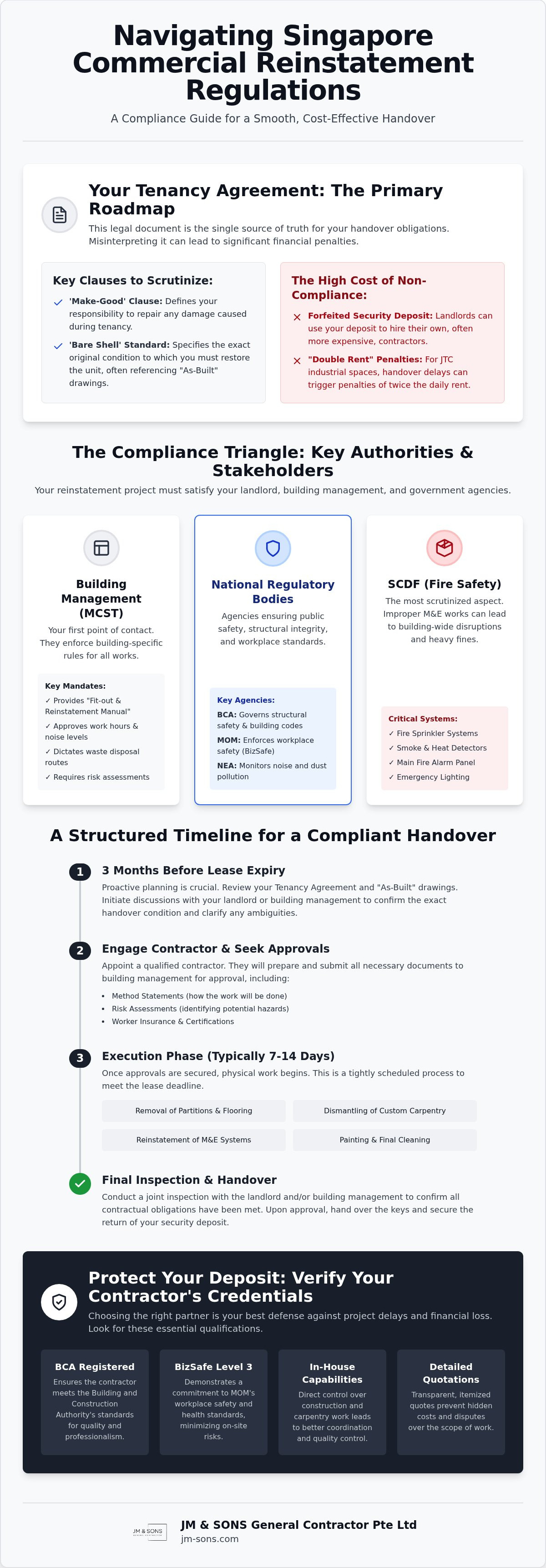
Reinstatement in Singapore is the process of restoring a commercial unit to its original "bare shell" state. It's a standard requirement in almost every commercial lease. While it might look like simple demolition, the reality is a complex alignment with building codes and contractual obligations. Understanding reinstatement works regulations Singapore starts with your Tenancy Agreement (TA), which serves as the primary legal foundation for the entire project. This document dictates the exact physical state the landlord expects when you hand back the keys.
Failing to meet these standards carries heavy risks. Landlords can legally forfeit your security deposit or charge you for the costs of hiring their own contractor, often at a significant premium. For those in JTC industrial spaces, the stakes are even higher. Delays in handing over a compliant unit can trigger "double rent" penalties, where you pay twice the daily rate for every day the unit remains un-reinstated. These regulations are significantly stricter than residential "hacking" works because they involve public safety systems and structural components that must be certified by the Building and Construction Authority (BCA). We've seen many tenants surprised by these requirements, but clear communication from the start prevents these costly disputes.
The 'Bare Shell' Standard vs. Managed Handover
In the Singapore CBD, a "bare shell" typically means removing all partitions, floor finishes, and custom built-in carpentry. The goal is to return the unit to the exact state shown in the "As-Built" drawings provided at the start of the lease. You shouldn't assume the current state is the required state. Always verify the handover condition with the landlord or building management before requesting a quotation. This simple step prevents disputes over whether a specific light fixture or floor tile should stay or go. It's about finding a fair middle ground that satisfies the contract without unnecessary work.
Common Legal Clauses in Singapore Commercial Leases
Most commercial contracts include a "make-good" clause. This requires you to repair any damage caused during your stay, including holes in the slab or scuffs on the common area walls. Timelines are usually tight. A standard 2,000 sq ft office often requires reinstatement to be completed within 7 to 14 days before the lease expires. To avoid last-minute panic, it's helpful to understand what is reinstatement works Singapore and how these clauses affect your final budget. We recommend reviewing these clauses at least three months before your lease ends to ensure you have enough time for coordination and approvals.
Key Regulatory Bodies: BCA, SCDF, and Building Management
Compliance isn't just a box to tick for your landlord; it's a legal requirement enforced by several national agencies. While your Tenancy Agreement sets the stage, the actual execution must align with the reinstatement works regulations Singapore has established to protect building integrity and public safety. Managing these different stakeholders requires a methodical approach to ensure you don't face stop-work orders or unexpected fines during the handover process.
The first gatekeeper you'll encounter is your building's Management Corporation Strata Title (MCST) or Building Management. They provide a specific "Fit-out and Reinstatement Manual" that dictates everything from the hours our team can work to the specific routes for waste disposal. Beyond the building walls, the National Environment Agency (NEA) monitors noise and dust levels, while the Ministry of Manpower (MOM) requires contractors to maintain strict safety standards, typically evidenced by a BizSafe Level 3 certification. We've operated as a family-run business since 1990, and we've seen how these requirements have evolved to prioritize tenant safety above all else.
SCDF Fire Safety and M&E Compliance
Fire safety is perhaps the most scrutinized aspect of any commercial handover. You can't simply cut fire sprinkler pipes or move smoke detectors to suit a new layout without proper coordination. These systems are linked to the building's main fire alarm panel. If a contractor accidentally triggers the system or fails to reset the fire alarm isolation correctly, it can lead to building-wide disruptions and heavy penalties from the Singapore Civil Defence Force (SCDF).
All mechanical and electrical (M&E) works must involve a Licensed Electrical Worker (LEW) to safely terminate power points and ensure the distribution board (DB) is returned to its original state. This ensures the unit is safe for the next tenant to occupy. If your project involves complex fire safety changes, speak with our team about SCDF coordination to ensure your fire protection systems are reinstated according to the approved plans.
BCA Requirements for Hacking and Demolition
The Building and Construction Authority (BCA) oversees the structural safety of all building works in Singapore. While most office reinstatements involve hacking non-load bearing drywall partitions, any modification to structural elements requires a professional engineer's endorsement and a formal BCA permit. Even for non-structural works, the way demolition is handled matters.
Contractors must manage the environmental impact of demolition carefully. NEA guidelines for noise and dust pollution are strictly enforced, especially in shared commercial buildings where other businesses are still operating. This is why many Grade A offices mandate that contractors hold a BizSafe Level 3 certification before they're allowed to enter the site. It’s a baseline for ensuring that the hacking process doesn't compromise the safety of other tenants or the building’s long-term structural health.
Industry-Specific Regulations: Office, Retail, and F&B
Every commercial sector in Singapore carries its own set of compliance hurdles. The specific nature of your business determines which reinstatement works regulations Singapore authorities will prioritize during your exit. One of the most critical factors is the "Change of Use" status. If you converted a standard office into a medical clinic or a retail unit into a café, your reinstatement scope must account for reversing these specialized modifications. You aren't just removing furniture; you're often restoring the unit's original utility as defined by the Urban Redevelopment Authority (URA).
Navigating the requirements of major landlords like CapitaLand or Mapletree adds another layer of complexity. These developers typically enforce strict manuals that go beyond basic building codes. For instance, while some smaller landlords might accept an "As-Is" handover if the next tenant wants your fit-out, major mall managers almost always demand a full "Bare Shell" restoration. They also mandate strict after-hours work schedules to avoid disrupting ongoing business operations. Our team has coordinated hundreds of these handovers since 1990, and we've found that early dialogue with building management is the only way to avoid last-minute disputes over the "original condition" of the space.
F&B Reinstatement: Grease Traps and Gas Pipes
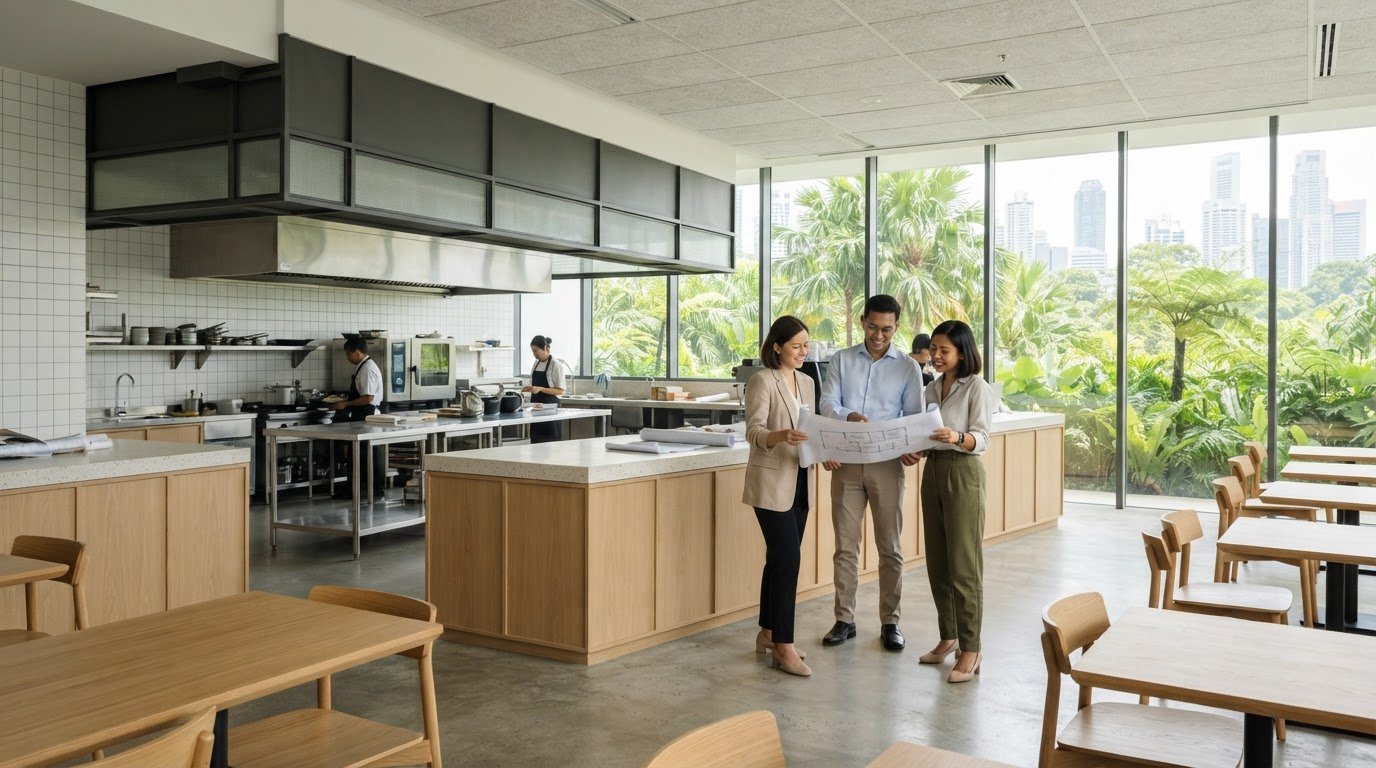
F&B units are the most complex to reinstate due to heavy mechanical and electrical requirements. The National Environment Agency (NEA) requires grease interceptors to be professionally cleaned and decommissioned before the handover is accepted. You can't just leave a kitchen as it is. SCDF regulations also mandate that all commercial gas piping be removed and sealed by a licensed gas service worker to prevent leaks. Mall management will often request specialized cleaning certificates for the exhaust and ducting systems to ensure no fire hazards remain. This level of detail is why we emphasize a methodical, step-by-step approach for our F&B clients.
Office and Retail Reinstatement Nuances
Office reinstatements usually focus on the "big three": partition removal, carpet hacking, and ceiling restoration. You must return the ceiling grid to its standard height and ensure all lighting is functional and aligned with the original plan. For a deeper look at these requirements, you can refer to our retail reinstatement works Singapore guide for sector-specific advice.
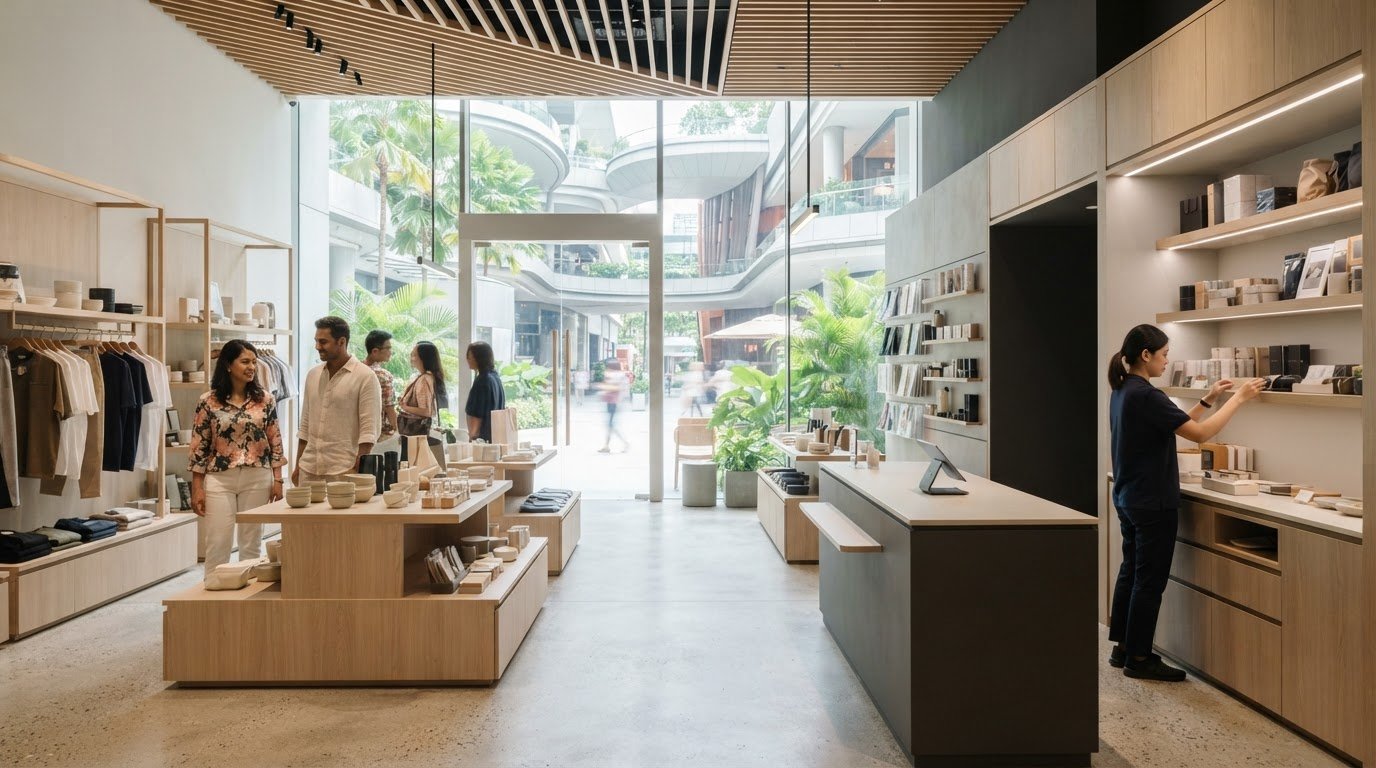
Retail units face different challenges, such as signage removal and shopfront restoration. Landlords are particularly sensitive about the floor leveling; if you installed raised platforms or heavy tiling, the sub-floor must be ground down and made smooth. It's often helpful to look at our office interior fitting out Singapore guide to understand the reverse of this process. Knowing how a space is built helps you understand exactly how it needs to be taken apart to meet compliance standards.
The Reinstatement Process: Timeline and Coordination
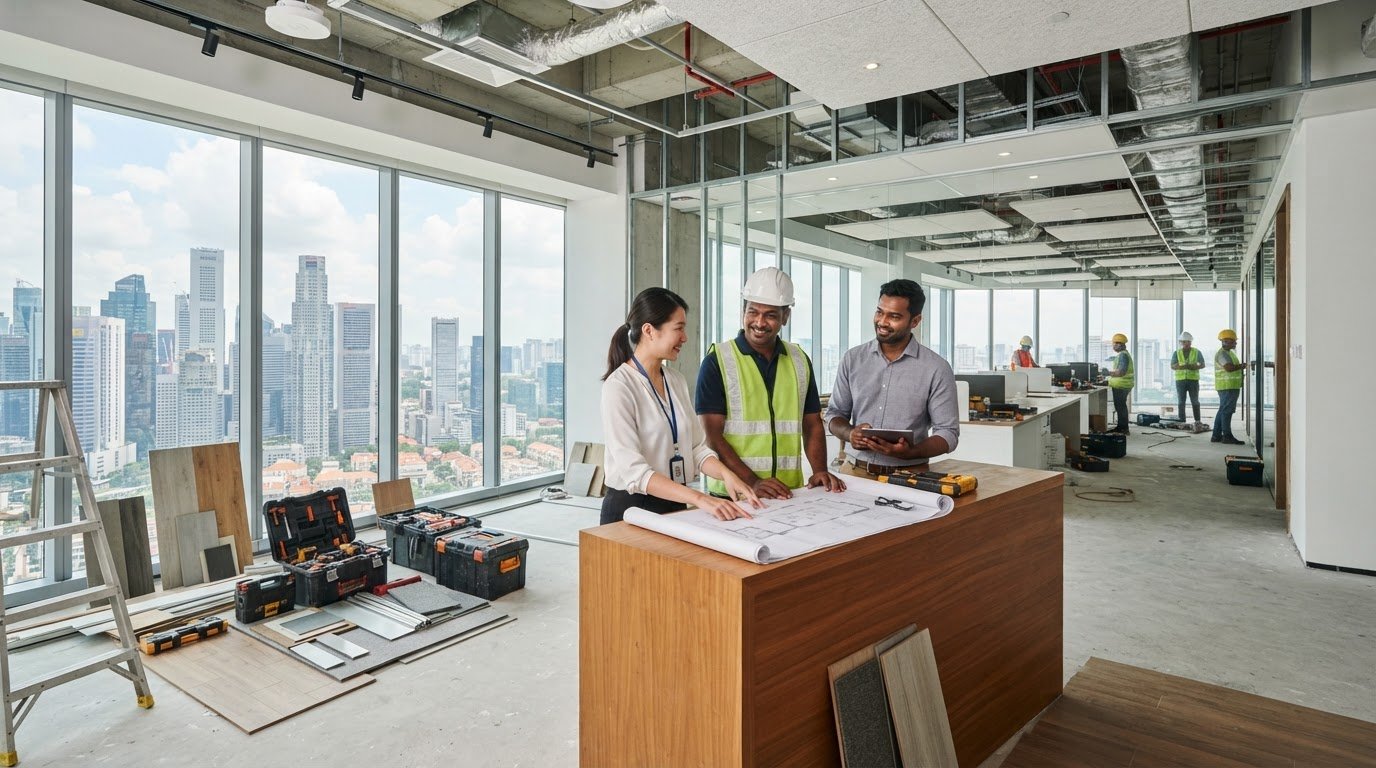
Reinstatement isn't a single weekend job. It's a structured coordination project that requires precision timing and clear communication. Following reinstatement works regulations Singapore means managing multiple moving parts simultaneously to meet both legal and building-specific standards. The process begins with a joint site inspection between you, your landlord, and your contractor. This is the moment to confirm exactly what stays and what goes. We've seen many disputes avoided simply by taking photos and marking up the original floor plan during this initial walk-through. Once the scope is clear, we move to the documentation phase.
Building management requires a comprehensive Method Statement and a Risk Assessment (RAMS) before they'll issue a Permit to Work. The actual execution involves the physical hacking of partitions, dismantling built-in furniture, and the safe termination of M&E services. This is followed by heavy debris removal. We ensure all waste disposal follows NEA standards, using only approved dump sites to maintain environmental compliance. The final step is the Final Joint Inspection. This is where the landlord signs off on the condition of the unit and you officially return the keys. We've been handling these complex handovers since 1990, and we know that a documented, step-by-step approach is the only way to protect your security deposit.
Planning Your Timeline to Avoid Double Rent
Timing is everything when you're ending a tenancy. We always recommend a "Safety Buffer" of at least one week. If your lease ends on the 30th, aim to have the unit ready for inspection by the 23rd. This gives you a window to handle any minor touch-ups the landlord might request without slipping into a new month of rent. Remember that most commercial buildings in Singapore's CBD or industrial zones only allow hacking and heavy drilling after 6:30 PM on weekdays or during weekends. These restricted hours mean a project that looks like three days of work might actually take ten calendar days. To stay on track, you can use our end of lease reinstatement Singapore checklist to map out your exit strategy.
Managing Building Management (MCST) Expectations
Your renovation deposit is at stake during this phase. Building management (MCST) will monitor the common areas closely for any signs of neglect. They often reject handovers for simple reasons like dust in the hallway or minor scratches in the lift car. A robust Method Statement proves to the MCST that we're following all building rules and safety protocols. We take responsibility for protecting the common areas and managing the Permit to Work application process on your behalf. If you want to ensure your handover goes exactly as planned, schedule a joint site inspection with us to walk through your unit and identify potential compliance issues early.
Choosing an Ethical Reinstatement Contractor in Singapore
The temptation to choose the lowest quote for a project you're leaving behind is understandable. However, "cheap" hacking services often lead to expensive landlord rejections that can cost you far more than the initial savings. When a contractor cuts corners on debris disposal or fails to follow reinstatement works regulations Singapore authorities have set, the legal and financial liability remains with you, the tenant. An ethical contractor doesn't just clear the space; they protect your interests by ensuring every aspect of the handover meets the building's specific standards.
Verification is your best defense against unexpected handover disputes. You should always check if a contractor is BCA registered and holds a BizSafe Level 3 certification. These aren't just badges; they're proof that the company follows strict safety protocols and possesses the technical competence required for commercial works. At JM & Sons, we prioritize accountability through detailed, "no-hidden-cost" quotations. We believe in being straight-shooters, providing a clear breakdown of costs so you aren't surprised by "administrative fees" or "unforeseen disposal charges" halfway through the project.
The JM & Sons Difference: Experience Since 1990
We're a second-generation family contractor, and our reputation is built on the promises we keep during the handover process. Our team conducts thorough site surveys to identify potential regulatory roadblocks, such as hidden M&E complications, before you sign a contract. This transparency gives you peace of mind. Our in-house 10,000 sq ft carpentry facility is a significant advantage for tenants. If your landlord requires the restoration of custom fixtures or specific wood finishes that were part of the original unit, we can fabricate and install them quickly without relying on third-party suppliers. This control over the supply chain ensures we meet tight deadlines and maintain high quality standards.
Final Checklist Before You Appoint a Contractor
Before you commit to a partner for your exit, ask these practical questions to ensure they can handle the complexities of a Singapore commercial handover:
Does the contractor have established Licensed Electrical Worker (LEW) and SCDF-certified partners for M&E terminations?
Are they familiar with the specific "Fit-out and Reinstatement Manual" used by your building's management?
Can they provide a clear, itemized breakdown of hacking, disposal, and restoration costs?
Do they have a proven track record of handling after-hours works in your specific business district?
Choosing the right partner means you can focus on your new location while we handle the complexities of your old one. If you're ready for a smooth, dispute-free handover, contact JM & Sons for a professional site survey and detailed reinstatement quote. We'll help you navigate the final steps of your tenancy with clarity and integrity.
Securing Your Commercial Handover with Confidence
A successful exit from your commercial space requires more than just clearing out furniture. It's a structured alignment with the reinstatement works regulations Singapore has established to ensure building safety and continuity. By understanding your Tenancy Agreement, coordinating early with building management, and allowing a one-week safety buffer, you can avoid the common pitfalls of double rent and rejected handovers. Protecting your security deposit comes down to choosing a partner who values transparency as much as technical skill.
Since 1990, JM & Sons has helped Singapore businesses navigate these complexities with accountability and care. As a BCA Registered and BizSafe Level 3 Certified contractor, we handle everything from complex SCDF coordination to custom restoration in our 10,000 sq ft in-house carpentry facility. We believe in providing detailed quotations that respect your budget and your timeline. If you're ready to close this chapter with peace of mind, Request a Professional Reinstatement Assessment from JM & SONS today. We look forward to helping you move forward with confidence.
Frequently Asked Questions
What is the standard reinstatement period for a commercial lease in Singapore?
Most commercial leases in Singapore require reinstatement to be completed between 7 to 14 days before the official lease expiry date. This buffer allows the landlord to conduct a final joint inspection and gives you time to rectify any minor issues without overstaying. You should check your Tenancy Agreement for specific clauses, as some premium Grade A buildings may demand a longer handover window to facilitate their next tenant move-in.
Do I need a BCA permit for hacking internal office partitions?
You typically don't need a formal BCA permit for hacking non-load-bearing internal drywall or glass partitions. However, any works affecting the building's structural integrity or primary fire safety systems will require a Professional Engineer's endorsement and formal approval. It's best to verify the "As-Built" drawings with your building management to ensure your planned works remain within non-structural limits and comply with safety standards.
Why does my landlord require an SCDF-certified person for sprinkler works?
Landlords require SCDF-certified personnel because fire sprinklers are part of a critical life-safety system that protects the entire building. Any modification or relocation of these heads must be tested and certified to ensure they function correctly in an emergency. This is a vital part of reinstatement works regulations Singapore, as improper handling can lead to system-wide failures or accidental fire alarm triggers that disrupt other tenants.
What happens if I cannot complete reinstatement before my lease expires?
Failing to complete reinstatement on time often results in the landlord deducting the cost of the works from your security deposit at a premium rate. In many industrial or JTC spaces, you may also be liable for "double rent" penalties for every day the unit isn't handed over in its original condition. This financial risk makes it essential to start your contractor selection process at least two to three months before your exit.
Can I leave some of my fit-outs behind if the next tenant wants them?
You can only leave fit-outs behind if the landlord provides explicit written consent, often through a "Novation Agreement" or a "Letter of Undertaking" from the incoming tenant. Without this legal document, the landlord has the right to demand a full bare-shell restoration regardless of the next tenant's preferences. We recommend securing this agreement early in your exit planning to avoid the cost of unnecessary hacking and disposal.
Is BizSafe Level 3 mandatory for reinstatement contractors in Singapore?
BizSafe Level 3 is a mandatory requirement for contractors entering most Grade A office buildings and major shopping malls in Singapore. It demonstrates that the contractor has a robust Risk Management plan in place to handle hacking and debris removal safely. Choosing a certified contractor protects you from potential legal liability should any accidents occur on-site during the demolition or M&E termination process.
How much does professional reinstatement typically cost for a CBD office?
The cost of professional reinstatement depends on the complexity of your existing fit-out, the volume of debris, and the specific mechanical and electrical requirements of your building. Factors like after-hours work restrictions and the need for specialized SCDF-certified fire safety coordination will influence the final quotation. We provide detailed, itemized site surveys to help you understand the exact scope of work required before any contracts are signed.
What is the difference between 'bare shell' and 'original condition'?
A "bare shell" handover typically requires the total removal of all floor finishes, partitions, and false ceilings back to the raw concrete and slab. "Original condition" is a contractual term that refers to the specific state of the unit when your lease began, which might include existing lighting or carpets. You should refer to your reinstatement works regulations Singapore documentation and move-in photos to clarify these specific expectations with your landlord early on.
Comments